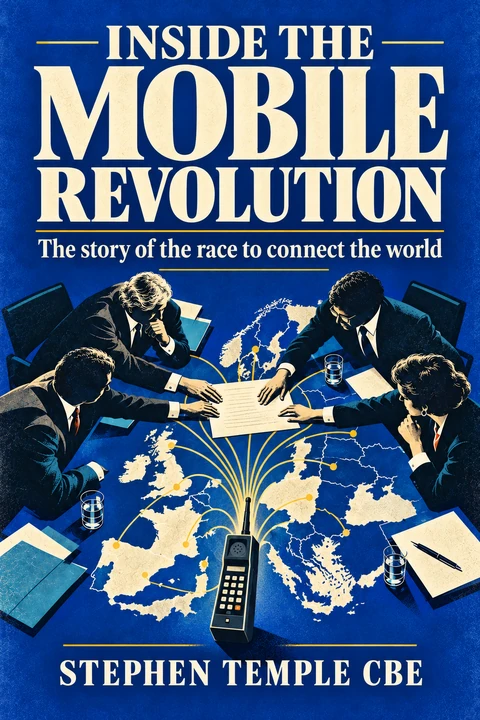
About GSM History
Eye witness accounts
Behind GSM’s public milestones lay private arguments, unexpected alliances and moments when agreement nearly fell apart. Politicians, senior civil servants, industrial leaders and engineers were making decisions without knowing how far their consequences would reach. Some of these stories could not be told in public for years.
Stephen Temple was there. He recorded events while they were still fresh, and his account circulated inside the Department of Trade and Industry before publication was restricted under the Official Secrets Act.
After permission to publish was obtained, participants were invited to check the account. Their recollections helped corroborate events, correct details and fill gaps. Together with the surviving contemporary documents, these accounts preserve an unusually detailed first-hand record of the negotiations, political manoeuvres and technical disagreements behind GSM.
This is the inside story of a venture whose success was never assured, told by people who helped shape it.
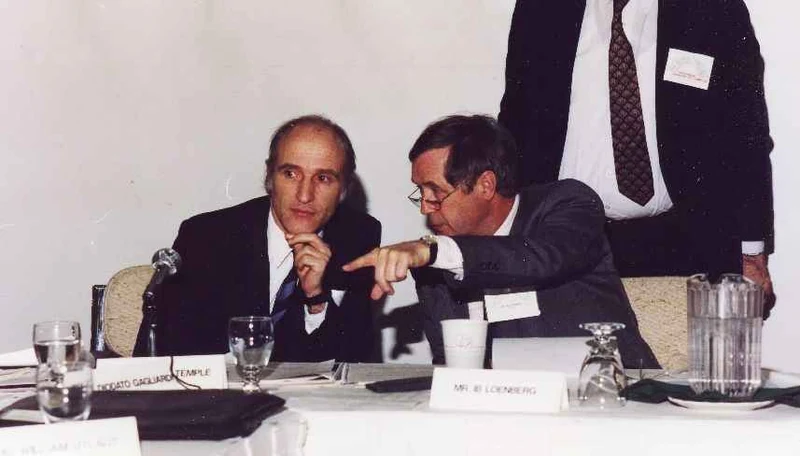
Original documents
Few people imagine that notes scribbled during a meeting will one day become historical treasures. Yet handwritten papers from the negotiations that created GSM have survived alongside internal government minutes and signed agreements that could so easily have disappeared. These working documents preserve the arguments, uncertainties and breakthroughs as decisions took shape, before anyone knew whether a common European mobile system would succeed.
The collection brings together British government minutes and policy papers, French, German and Italian research agreements, CEPT technical work, the GSM Memorandum of Understanding and operators’ signatures. There are milestones for building networks and records of the first GSM handset approvals. These are the commitments and compromises made while the outcome was still uncertain.
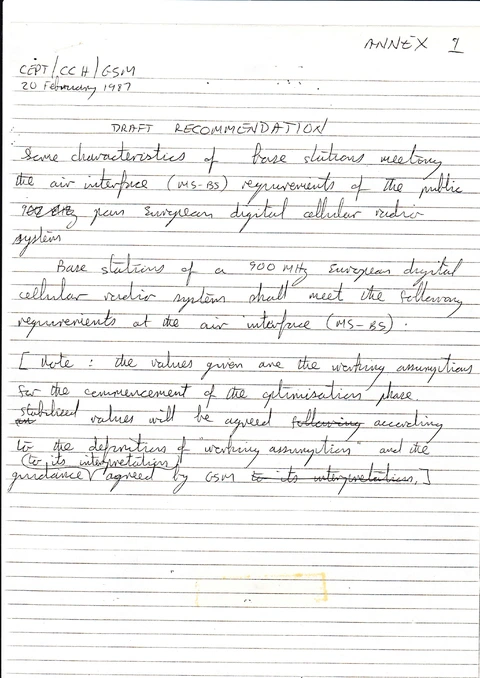
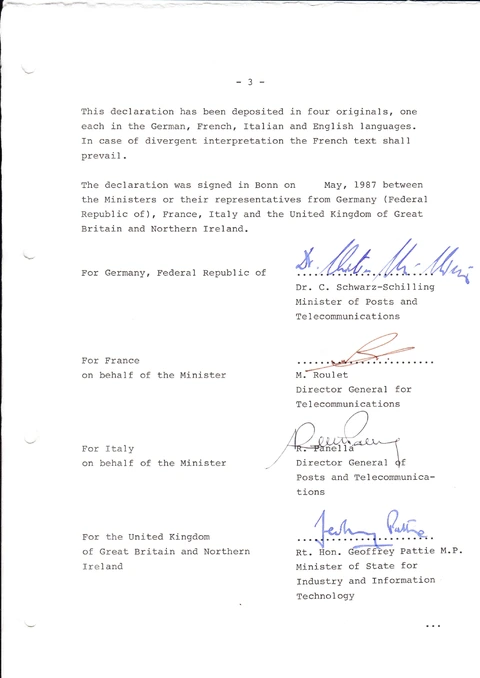
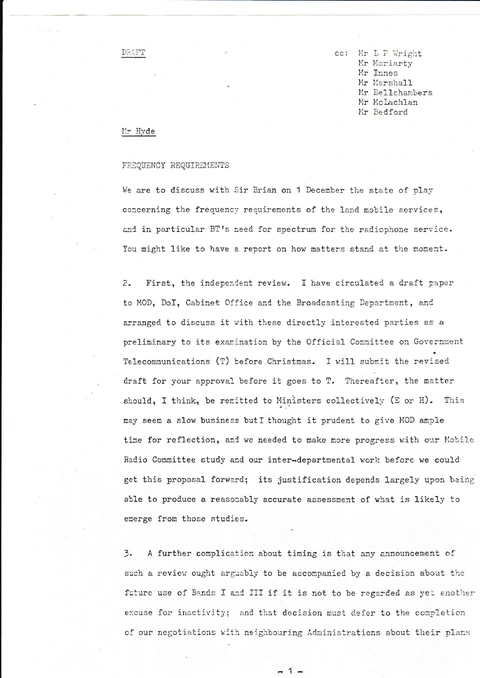
Above are some example surviving documents. Go to the rare documents archive to see the rest.
In-depth analysis
Why does one promising technology take off while another fails? The answer is rarely in the engineering alone. It lies in the papers people signed, the risks they took, the warnings they ignored and the compromises they made. To piece together what really happened, you need those records, access to the people involved and an understanding of the worlds of government, business, technology and international negotiation.
Stephen Temple has spent more than fifty years working across them. Inside British government, including the Department of Trade and Industry, he helped turn political ambitions into practical agreements. He drafted the GSM Memorandum of Understanding, led the UK’s role in establishing ETSI and became its first Technical Assembly chairman. ETSI itself was established by CEPT in 1988, through a collective international effort.
His later work at ntl put him inside the commercial decisions about broadband and digital television. As Director of Special Projects in Vodafone’s Group Corporate Strategy organisation, he examined those choices from within a major mobile business. At Surrey’s 5G/6G Innovation Centre, where the University lists him as a Visiting Professor, he has brought research, spectrum regulation and government policy back into the same conversation.
That perspective helped shape the European 5G pioneer-band approach. It also informs his continuing work on spectrum policy and papers about the future of communications, including 6G. Long-standing relationships with colleagues across government, industry and international bodies give the accounts another dimension: an understanding of what people on the other side of the table were trying to achieve.
The resulting analysis asks harder questions than who won. What did the participants fear? Why did a sensible-looking proposal fail? Which compromise made progress possible—and what did it cost later? GSM History brings these first-hand insights, original evidence and hard-won lessons together in a record only those inside the decisions could have made.
Vintage mobiles
Why did a new handset persuade people to replace the one they already owned? The website’s Vintage Mobiles and Great Designs collections explore the answers through the products themselves. Smaller phones made portability practical. Games, cameras, messaging, email and better screens gave people new reasons to buy—and changed what they expected a phone to do.
Features were only part of the appeal. Flip phones, clamshells, the exceptionally thin Motorola Razr and bold colours and finishes made appearance a selling point. BlackBerry became closely associated with business communication, while the Nokia 8110’s association with The Matrix gave it a place in popular culture. These collections look at what caught on, what sold and what made a model memorable beyond its specifications.
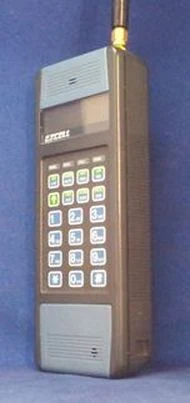
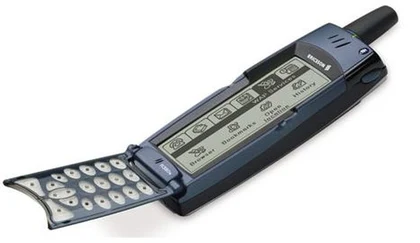
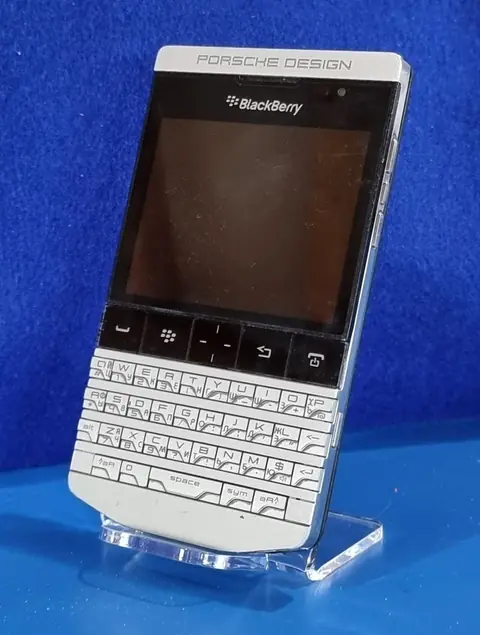
Explore Vintage Mobiles for the innovations that changed how people used their phones. Discover Great Designs for the shapes, styling and originality that turned useful devices into desirable possessions. Together, the collections show how features, fashion and function reshaped the mobile market.
Online books
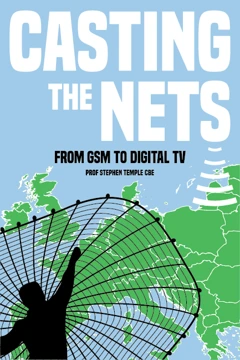
Read two remarkable accounts of the mobile and digital revolutions here in full, free of charge. GSM History is the exclusive authorised online home of Inside the Mobile Revolution and Casting the Nets, written by Stephen Temple from his own involvement and his knowledge of the people behind the decisions.
Honouring important contributors
GSM was the work of many people. Technical ingenuity mattered, but so did organising committees, resolving regulatory obstacles and persuading institutions to act together. Some of those contributions are less widely remembered than the names of companies or political leaders.
These names offer a starting point across the technical, regulatory and organisational work. Each leads to the accounts in which the person appears. Here are some contributors, in no particular order, a few of the list in the People directory.
- Jonathan Phillips
- David Hendon
- Mike Goddard
- Robert Priddle
- Ted Beddoes
- Thomas Haug
- Philippe Dupuis
- Armin Silberhorn
- Renzo Failli
- Alain Maloberti
- Jan Audestad
- Bernard Mallinder
- Thomas Beijer
- Friedhelm Hillebrand
- Finn Trosby
- Kevin Holley
- Ian Harris
The People directory brings together participants and other individuals named in the books and historical collection, with links back to the source accounts.
About the author

Stephen Temple CBE
- Author of the original GSM Memorandum of Understanding.
- Led the UK’s role in establishing ETSI; its first Technical Assembly chairman.
- 1994 IEEE award for international communications.
- 1996 CBE for services to trade and industry.
- 1996 GSM Association Chairman’s Award for Outstanding Achievement.
- Fellow of the Royal Academy of Engineering and the Institution of Engineering and Technology.
- Visiting Professor at the University of Surrey
- Technical Secretary of the 5GIC Strategy Advisory Board
Visit the museum
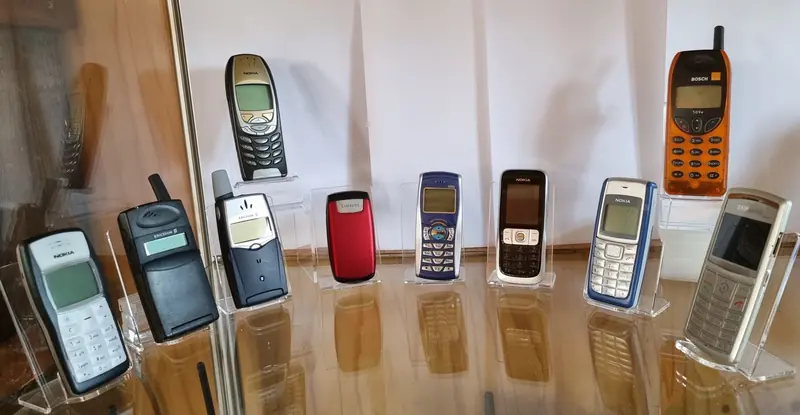
At the University of Surrey’s 5G/6G Innovation Centre, Stephen Temple’s mobile phone collection brings together significant handsets from the development of mobile communications. Early portable phones and practical pocket-sized designs show the effort it took to make a telephone something people could carry everywhere.
Then come the devices that made a phone a camera, a games machine or an indispensable business tool. Alongside these changes are imaginative industrial designs and fashion-led models, including phones shaped like a lipstick, a powder compact and a chocolate bar. The collection puts technical breakthroughs and design ambition side by side: a chance to see how phones changed, in a centre researching the communications systems that will follow them.
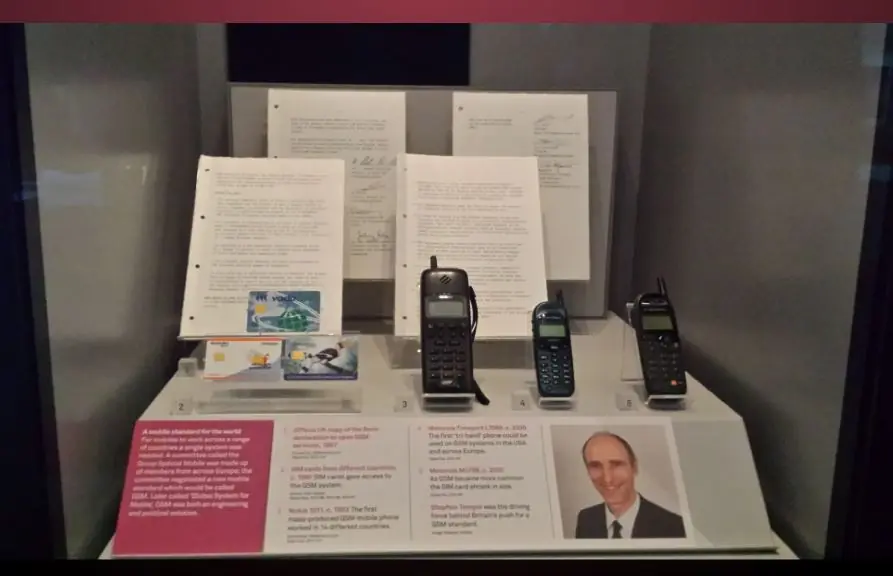
More mobiles and distinctive communications exhibits can be seen at the Science Museum in London. Its collections include important objects and documents from the development of mobile telephony and GSM. The historic display pictured here brings early handsets and GSM documents together with Stephen Temple’s portrait, recognising the people as well as the agreements behind the system. This is a separate London collection from Stephen’s handsets at Surrey.
Contact
To get in touch about GSM History, email stephentemple.surrey@gmail.com.